Dehydrated Vegetable Powder
Tomato Powder
Natural colour and tang for sauces, soups and snacks
Introduction
About our tomato powder
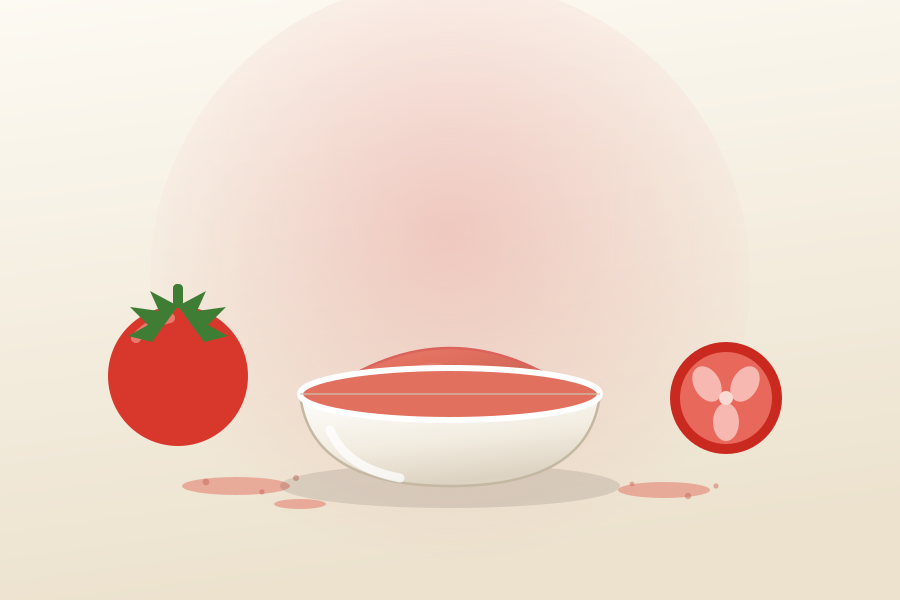
Tomato powder earns its place in a formulation twice over: once for flavour and once for colour. The same carotenoid that makes ripe tomatoes red — lycopene — gives the powder its warm brick-red hue, so a well-made tomato powder contributes visual appeal and tangy, umami-rich taste in a single dose. For snack seasonings and instant soups, that combination is difficult to replace with any other natural ingredient.
Driedland Foods and Spice supplies tomato powder produced from ripe, red-fleshed tomatoes for export buyers in the sauce, soup, seasoning and snack industries. Depending on buyer requirements, tomato powder in the market is generally produced either by spray drying tomato paste or by drum/air drying tomato pulp — the routes differ in solubility, density and colour behaviour, and we help buyers select the grade that suits their process.
Spray dried powder is fine, light and dissolves almost instantly, making it the usual choice for beverages, instant soups and smooth sauces. Drum and air dried material tends to be denser with a slightly deeper, cooked profile that works well in seasonings and dry blends. Because tomato solids are naturally high in sugars and acids, tomato powder is notably hygroscopic — packaging with dependable moisture barriers is not optional, and our packing reflects that.
Buyers evaluating tomato powder typically focus on three things: colour strength, acidity (natural tomato tang), and how cleanly the powder rehydrates. We recommend testing a sample in your actual application — a seasoning slurry, a reconstituted sauce — rather than judging the dry powder alone.
Key Benefits
Why food manufacturers use tomato powder
Colour and flavour in one ingredient
Delivers natural red colour and authentic tomato tang simultaneously, simplifying label declarations compared with separate colourants and acids.
Instant reconstitution
Fine grades disperse rapidly into water or oil systems, reconstituting into paste-like consistency for sauces and soups.
Year-round tomato supply
Removes dependence on fresh tomato seasonality and price volatility — the powder performs identically in January and July.
Massive logistics saving
Fresh tomatoes are mostly water; the powder concentrates the solids, cutting shipping weight and eliminating cold-chain and spoilage risk entirely.
Clean-label friendly
A single-ingredient vegetable powder that supports simple, recognisable ingredient declarations in consumer products.
Applications
Where this ingredient is used
Snack seasonings
The base of tomato, tangy and barbecue-style dusts for chips, extruded snacks and crackers.
Instant soups and cup meals
Reconstitutes quickly in hot water, providing body, colour and tomato flavour in dry soup formats.
Sauces, ketchups and gravies
Boosts tomato solids and colour in ketchup, pasta sauces, pizza sauces and cooking gravies.
Seasoning blends and rubs
Adds tang and colour to fajita, taco, peri-peri and barbecue blend formulations.
Ready meals and rice mixes
Provides cooked-tomato character in instant rice, pasta kits and dehydrated ready meals.
Bakery and savoury products
Colours and flavours savoury biscuits, breadsticks, and tomato-flavoured dough applications.
Industries Served
Sectors we supply this product to
Because tomato powder is bought for colour as much as taste, our buyers here include formulators replacing synthetic red colourants as well as conventional seasoning houses.
Specifications
Typical product specification
| Product form | Fine free-flowing powder |
|---|---|
| Colour | Red to deep brick red |
| Flavour | Tangy, sweet-sour, characteristic of ripe tomato |
| Mesh size | Typically 60–80 mesh; custom sizes on request |
| Moisture | Typically below 5–6%; as per buyer specification |
| Origin | India |
| Additives | None standard; anti-caking agent on request |
| Documentation | Specification sheet provided with quotation |
Export Capability
What we offer international buyers
- Export-quality production and packing
- Bulk supply for industrial buyers
- Custom packaging and pack sizes
- Private label and OEM manufacturing
- Custom mesh and moisture specifications
- Samples available for evaluation
- Export documentation support
- International shipping coordination
- Worldwide supply capability
Packaging, Storage & Shelf Life
Getting the product to you in the condition you expect
Packaging
- Multi-layer barrier bags inside cartons or woven sacks, typically 20–25 kg, to control moisture pickup
- Nitrogen-flushed or vacuum options discussable for colour-sensitive applications
- Retail pouches and jars under private label programmes
- Custom pack weights, liners and labelling as per buyer requirement
Storage
Store sealed in a cool, dry area below 25 °C away from light. Tomato powder is strongly hygroscopic and its colour is light-sensitive over time — keep containers closed tightly and rotate stock first-in, first-out.
Shelf Life
Typically 12–18 months from production in unopened barrier packing under recommended conditions. High-humidity destinations may warrant upgraded packing — we advise per order.
Quality
How quality is controlled
Colour strength, moisture, particle size and reconstitution behaviour are checked on every lot against the agreed specification before dispatch.
Only ripe, red, sound tomatoes enter production; green, damaged or mouldy fruit is rejected at intake because raw material defects show directly in powder colour.
Sieving and metal detection are standard, and buyers may request lot-specific pre-shipment samples or third-party inspection.
Our quality process page explains the full approach across all products.
Manufacturing
How it is made
- Ripe tomatoes are washed, sorted and pulped, and the pulp is concentrated to raise the solids content.
- The concentrate is dried — through spray drying for fine instant grades or drum/air drying for denser grades — with parameters managed to protect lycopene colour.
- Dried material is milled and sieved to the agreed particle band, then passed through magnetic separation and metal detection.
- Because the powder attracts moisture quickly, packing into barrier liners happens immediately after milling in a controlled environment.
FAQs
Tomato Powder — frequently asked questions
Is your tomato powder spray dried or drum dried?
Both routes exist in the market and suit different applications — spray dried for instant solubility, drum/air dried for dense seasoning use. Tell us your application and we will recommend and sample the appropriate grade.
Will tomato powder cake during sea shipment?
Tomato powder is hygroscopic, so barrier packing matters. We pack in multi-layer liners designed for export transit, and for hot, humid destinations we can discuss upgraded or nitrogen-flushed packing.
How much water does it take to reconstitute tomato powder?
As a working guide, blending roughly three to four parts water with one part powder produces a paste-like consistency, adjustable to your target solids. Exact ratios depend on the grade — reconstitution guidance ships with samples.
Does the powder contain added colour or acid?
No. The red colour comes from the tomato's natural lycopene and the tang from its own sugars and acids. Nothing is added in our standard grade.
Can you supply tomato powder for retail private label?
Yes — pouches, jars and shaker formats under your brand, with your label artwork and pack sizes. Our private label page covers the process.
What shelf life will remain on arrival at destination?
We ship freshly produced lots, so the large majority of the stated shelf life remains on arrival. Production and best-before dates are printed on export packing for traceability.
Related Products