Dehydrated Onion
Red Onion Flakes & Powder
Deep colour and sweet-sharp flavour for ethnic and retail blends
Introduction
About our red onion flakes & powder
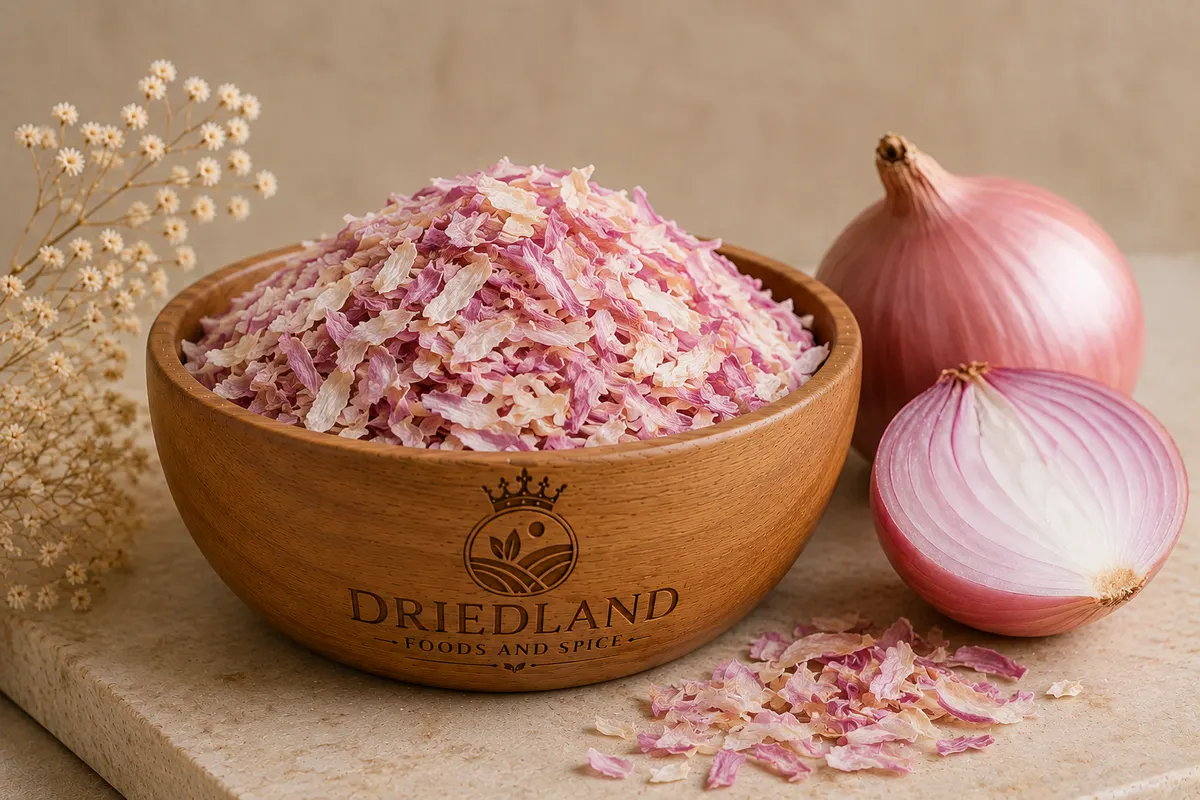
Red onion brings something to a formulation that white onion deliberately avoids: colour and character. The anthocyanin pigments in the skin and outer layers carry through drying as a warm pink-violet cast, and the flavour runs sweeter and rounder than the sharp bite of white dehydration varieties. Where a blend is supposed to look and taste like real onion — visibly, unapologetically — red is the line buyers reach for.
Driedland Foods and Spice manufactures dehydrated red onion in the same full cut range as our white line: kibbled flakes, chopped, minced, granules and powder. The volume mover here is unsorted kibbled, which the trade buys in bulk for ethnic seasoning blends, tandoori-style marinades and fried-onion applications where a mix of colour tones reads as authentic rather than as a defect.
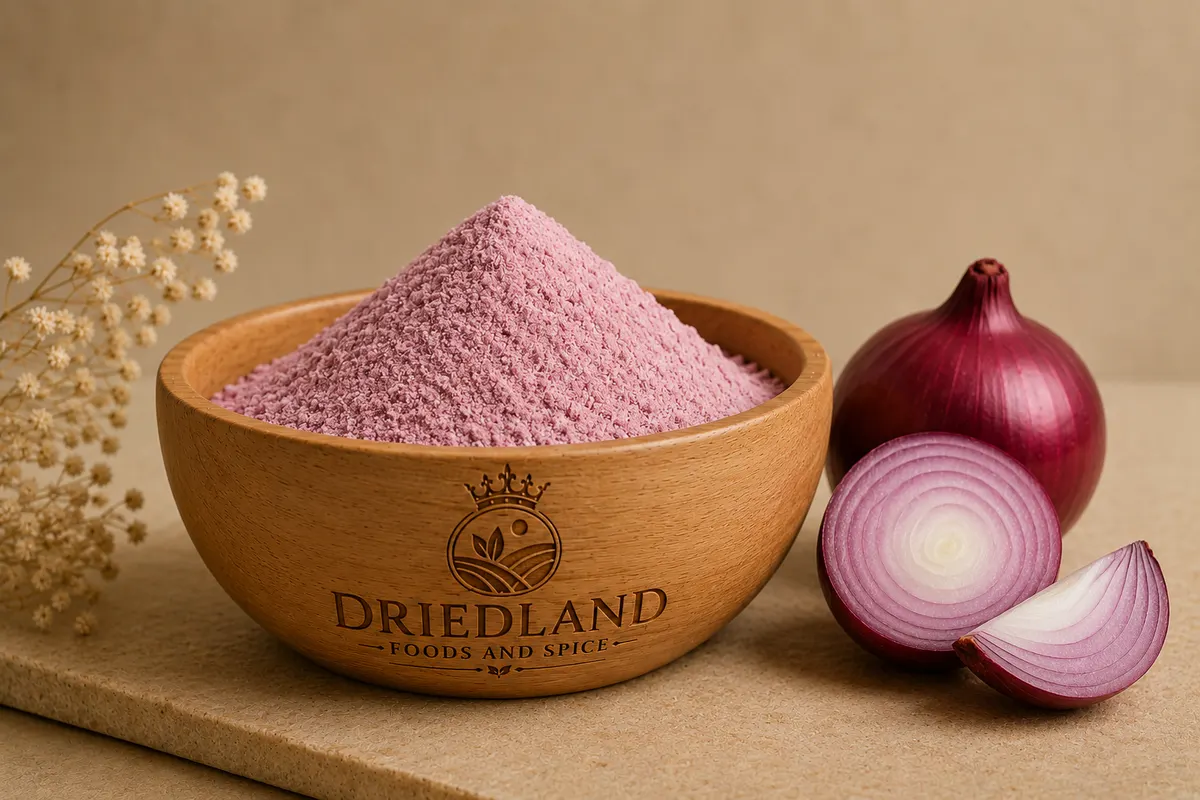
It is worth being clear about what red onion powder looks like, because first-time buyers are sometimes surprised. The powder is not red; it dries to a pinkish-buff tone that varies naturally with crop and season, and it will never colour a product the way beetroot or tomato powder does. Buyers choose it for flavour profile and for the visible flake, not as a colourant.
Indian red onion is the backbone of the subcontinent's cuisine, and demand for the dehydrated form follows the diaspora: seasoning houses and food manufacturers serving South Asian, Middle Eastern and African markets are our steadiest red onion buyers, alongside snack producers who want its slightly caramelising sweetness in fried applications.
Product Family
The sub-products we supply in this line
Each red onion flakes & powder sub-product below comes from one shared raw-material base, so flavour stays identical while the cut changes.
Red Onion Flakes — Unsorted
The volume grade for ethnic blends and fried-onion production, where mixed tones read as authentic.
Red Onion Powder
Sweet-sharp onion depth milled fine for marinades, pastes and snack seasonings.
Key Benefits
Why food manufacturers use red onion flakes & powder
Authentic colour character
The natural pink-violet cast of red onion reads as real, visible onion in blends and toppings — the point of choosing red over white.
Sweeter, rounder flavour
Runs less aggressively pungent than white dehydration varieties, with a sweetness that deepens attractively when fried or roasted.
Economical unsorted grade
Unsorted kibbled is the workhorse grade for ethnic blends and industrial use, where mixed tones are expected and priced accordingly.
Full cut range
Kibbled, chopped, minced, granules and powder from one dried base, milled to consistent particle bands.
Strong fried-onion performance
Rehydrated or straight into hot oil, red onion cuts brown sweetly — the base of birista-style fried onion applications.
Applications
Where this ingredient is used
Ethnic seasoning blends
The onion base of curry powders, biryani mixes, tandoori rubs and chaat masalas.
Fried onion products
Kibbled cuts fry into crisp birista-style toppings for institutional and retail supply.
Snack seasonings
Granules and powder bring sweet-savoury onion depth to extruded snacks and chips.
Marinades and pastes
Powder builds body and flavour in wet marinades and cooking pastes.
Ready meals and curries
Rehydrating flakes give visible onion in retorted and frozen curry-based meals.
Table condiments
Sorted flakes top breads, salads and prepared foods where appearance sells.
Industries Served
Sectors we supply this product to
Red onion sells hardest into ethnic food manufacturing and the seasoning houses serving it, with fried-onion processors a close second.
Specifications
Typical product specification
| Product forms | Kibbled/flakes (unsorted or sorted), chopped, minced, granules, powder |
|---|---|
| Colour | Pinkish-buff to pale violet, varying naturally by crop |
| Flavour | Sweet-sharp, characteristic of red onion |
| Typical cuts | Flakes 8–20 mm; minced 1–3 mm; granules 0.5–1 mm; powder 80–100 mesh |
| Moisture | Typically below 6–7%; as per buyer specification |
| Sorting | Unsorted industrial grade or colour-sorted export grade |
| Origin | India |
| Documentation | Specification sheet provided with quotation |
Export Capability
What we offer international buyers
- Unsorted workhorse grade
- Sorted export grade available
- Full cut range from one base
- Custom cut and mesh specifications
- Private label and OEM packing
- Samples from real production lots
- Export documentation support
- International shipping coordination
- Worldwide supply capability
Packaging, Storage & Shelf Life
Getting the product to you in the condition you expect
Packaging
- Laminated woven sacks or multi-wall paper bags with food-grade liner, typically 20–25 kg
- Lined cartons for flakes where crush protection matters
- Retail pouches and jars under private label programmes
- Custom pack sizes, liners and labelling as per buyer requirement
Storage
Keep sealed below 25 °C in a dry, odour-free store away from direct light — the natural pigment dulls with long light exposure, and like all onion products the material is hygroscopic. Reseal opened packs promptly.
Shelf Life
Around 12–24 months from production when the original packing stays sealed. Colour tone softens gradually across storage — flavour outlasts appearance on this line.
Quality
How quality is controlled
Lots are checked for cut size, colour tone, moisture and flavour character against the agreed specification before dispatch.
Because red onion colour varies genuinely with crop, we agree a reference sample with the buyer at the start of a programme rather than promising a fixed shade.
Sieving, magnetic separation and metal detection are standard, with pre-shipment samples available from the actual production lot.
Our quality process page explains the full approach across all products.
Manufacturing
How it is made
- Red onions are topped, peeled and washed, then sliced for even drying.
- Slices are dried under managed temperature to hold the sweet-sharp profile and natural colour tone.
- Cutting mills then separate the dried red onion into kibbled, chopped, minced, granule and powder streams.
- Sorted grades pass colour sorting; every grade passes magnetic separation and metal detection before lined export packing.
FAQs
Red Onion Flakes & Powder — frequently asked questions
Will red onion powder colour my product red?
No. It dries to a pinkish-buff tone and works as a flavour ingredient, not a colourant. If you need visible red colour, our beetroot and spray dried tomato lines are the right tools; red onion is chosen for its flavour and visible flake character.
Why does the colour vary between lots?
Anthocyanin content varies with variety, season and growing conditions, so a natural tone range is honest reality rather than a defect. For programmes where tone matters we agree a reference sample and grade against it.
Is red onion suitable for fried onion toppings?
Very — its higher sugar profile browns sweetly and evenly, which is why birista-style fried onion is traditionally made from red varieties. Kibbled cuts are the usual starting material.
Which grade do ethnic blend manufacturers usually buy?
Unsorted kibbled and granules, in volume. The mixed tones disappear into the blend and the economics are better than sorted grade, which is generally reserved for visible retail applications.
How does red compare with white onion in pungency?
White dehydration varieties are sharper and higher in solids; red runs sweeter and rounder. Many buyers blend the two to hit a target profile — we supply both, milled to the same cut standards.
What packaging protects the colour best?
Lined, opaque packing stored away from light. Pigment fade is slow but real, so we recommend first-in-first-out rotation and light-protective packing for retail programmes.
Related Products